Bear with me on this one, guys; it will start off sounding very weird and possibly pretentious, but that is not what I am putting out there.
We all know that there is a non-physical FORCE within us all that can do very strange and remarkable things.
Even naming it is a problem because so many of the terms come with unwanted baggage.
We can call it CHI, we can call it Forward Force, we can call it Kundalini, we can even call it the Power of Intent; at the end of the day, they are only words.
But that Force is real.
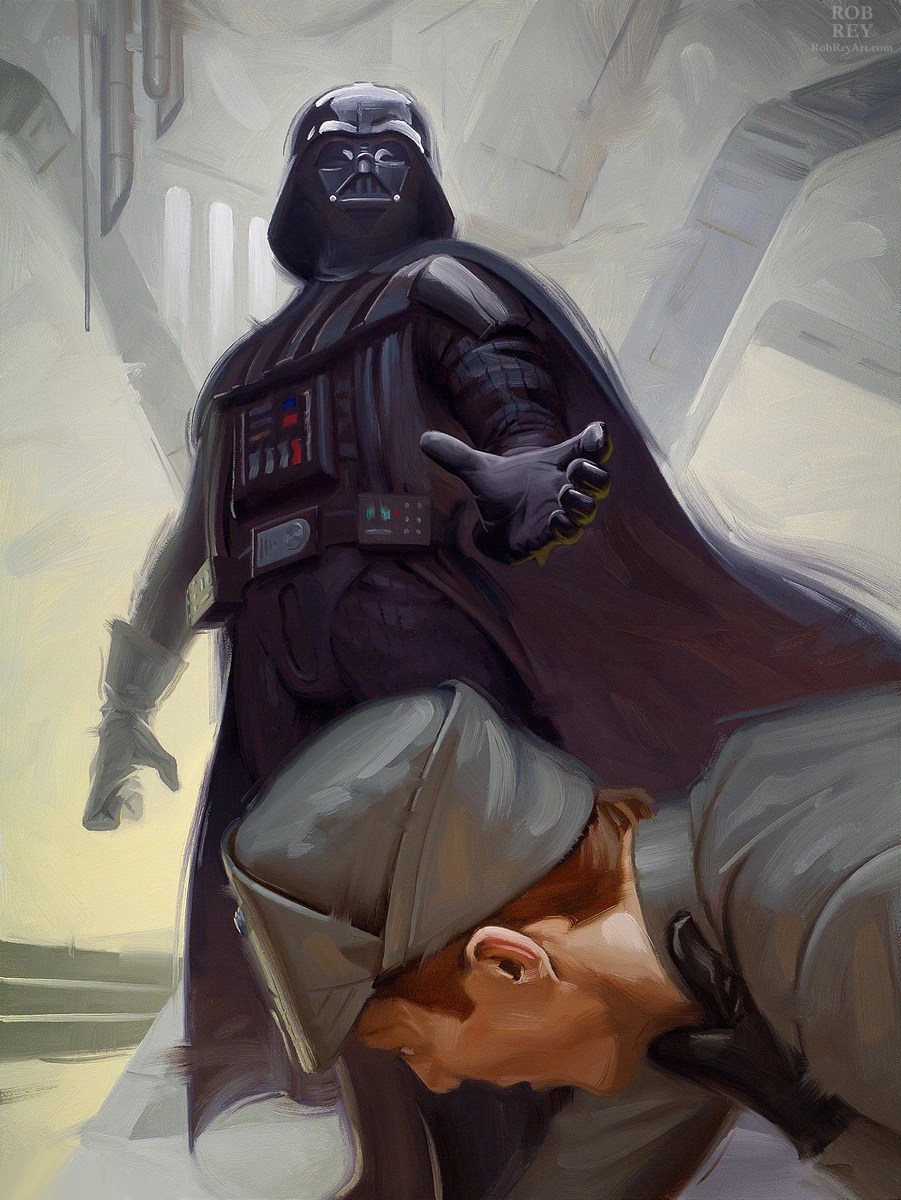
I am not talking about Darth Vader when I say Force; we all know that to choke people, we need to shake them warmly by the throat, but it is not Bullshit either.
But everyone I have ever met, especially people who clearly have it and use it, struggle to explain it.
This is where it may come over a little pretentious, but I assure you I am not trying to “Big up myself”.
I was watching a YouTube presentation describing the latest Chinese advances in Quantum Computing, explaining how there is a different effect to superposition when using light instead of the usual micro wires, while trying to understand the difference between the methods, not with a great deal of success. I must mention, I had a lightbulb moment concerning non-physical Force.
I do not know why it happened, but suddenly I was not listening to the telly, and my head was spinning.
Here are a few of the phrases that pushed my thinking sideways…
ABSTRACT PROBABILITY.
PROBABILISTIC LAWS OF THE UNIVERSE.
As these phrases were flying right over my head, the scientist said….
ERROR CORRECTION CRASHES THE SUPERPOSITION.
THE PROBLEM STARTS WHEN WE TRY TO UNDERSTAND.
On hearing this, I really did feel like a Greek in a bathtub.
We all try to explain “Non-Physical Force” with IDEAS that belong to the domain of “Physical Force”, we do not do this deliberately; it is just how our brain works, just how language works.
We try to explain non-physical force; we get it wrong, try to correct the error, get nowhere and hit the wall.
THE PROBLEM STARTS WHEN WE TRY TO UNDERSTAND.
Trying to understand is not only normal, but since we first started school, it was expected, in fact demanded, to the extent that our EGO will not let us simply accept something we misunderstand; we try to correct the error.
20 years of schooling makes this our default setting.
This ties in to the Warrior Priest / Warrior Monk conversation we have been having.
Warriors, and a perfect example of this are Samurai, did not learn how to meditate for the purpose of meditating; they learned how to meditate for the process required to be able to meditate.
The liminal space of “Not Knowing”.
Being completely fine with that, which requires that we dissolve the EGO, is not an easy ask for a Samurai; hence the Zen training.
Zen Buddhism is the Japanese interpretation of Chinese Chan Buddhism, which was taught at the Shaolin monastery, amongst others.
This is probably enough for the moment, but until we are all together, if you have the time, have a peep at some ZEN KOANS. A kōan, is a paradoxical story, dialogue, question, or statement used in Zen Buddhism to break through logical thought and prompt a direct, intuitive experience of truth.
I like this one…
Two monks argue whether a temple flag or the wind is moving. A master passes by and says, “Not the wind, not the flag; the mind is moving.”
WING CHUN’S FIST LOGIC, LEADS US TO ENDING VIOLENCE BY GETTING IN CLOSE AND BREAKING SOMETHING WITH A FIST.
There is naturally a bit of a contradiction when we refer to kicking in a FIST ART, and Wing Chun is a FIST ART; that is what the KUEN in Wing Chun KUEN signifies, and a loose English translation would be Eternal Springtime [Wing Chun], Boxing [KUEN].
This post is an attempt to clear your mind of old programming before this week’s training; starting with an empty-ish mind will save much time and effort.
It may seem a bit left field when talking about kicking, but we must begin by asking, “What is the most valuable lesson we take from Chi Sau”?
Of all of the great lessons we can take from Chi Sau, and there are many, the really valuable lesson when it comes down to transferring the ability to genuine violence is the ability to remain calm and make good choices when we stand at arm’s length and in full contact with an opponent.
We could go as far as to say that Chi Sau, in fact, all of Wing Chun’s Fist Logic, leads us to ending violence by getting in close and breaking something with a Fist.
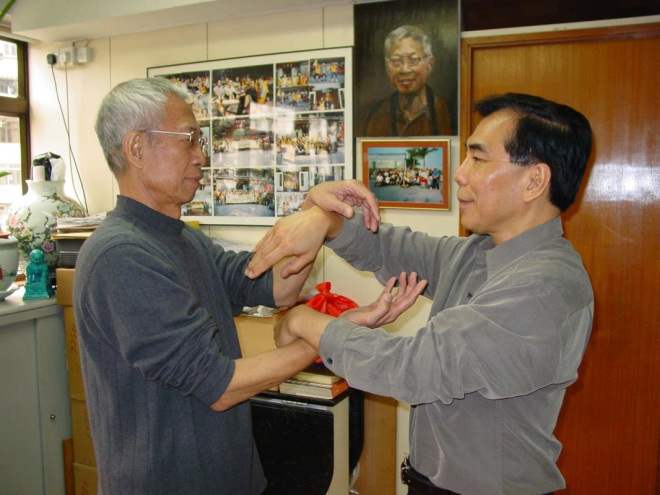
Chi Sau gets us familiar with the zone, the one square meter of the world that all things end in, handshake range…
…when anything ends…
…it ends here.
How does kicking fit this picture?
When we form a mental picture of kicking, it is a power-driven, forward-pressing attacking motion of the leg that has little, if anything, in common with counterattack, and as such is out of line with our Fiat Logic, and well outside the handshake zone.
How did we get there?
What are we countering?
And why are we stepping in?
In training situations, we all practice kicking from a standing position that is not under threat, let alone attack.
Is this how we see Wing Chun Kicking?
Let’s recap what Wing Chun is.
Wing Chun is a counterattacking style that has guidelines of SIMPLICITY; ECONOMY OF MOVEMENT; and MINIMUM USE OF BRUTE FORCE.
None of these descriptions sits comfortably with kicking.
We could go so far as to say that kicking sits way outside of these guidelines, outside the IDEA that is Wing Chun.
Here is the thing: The term kicking is wrong; it is a term that does not describe what we do and only helps to get us confused.
Wing Chun does not kick!
Let that sink in for a minute, and never remove the thought.
Wing Chun does not kick!
Wing Chun Stamps and Wing Chun Jams.
A Stamp, which is really just a dynamic way of stepping on something: SIMPLICITY; ECONOMY OF MOVEMENT; and MINIMUM USE OF BRUTE FORCE, are all present, and the power comes from transferring body weight to a non-moving body part, a little like snapping a twig to set a bonfire.
And a Jam. Which is performed by presenting a stable foot to an opponent’s moving body, again SIMPLICITY; ECONOMY OF MOVEMENT; and MINIMUM USE OF BRUTE FORCE, are all present, be it the opponent’s swinging leg or simply any major body region as the opponent is stepping in, stepping into our handshake zone. The power is produced in the same way as when a moving vehicle is stopped by a tree.
Whatever we may think will happen if we find ourselves in harm’s way, for it to be Wing Chun, it needs to be a counter to an attack, and it must abide by the principles of..
SIMPLICITY, PRACTICALITY, DIRECTNESS, ECONOMY OF MOVEMENT, MINIMUM USE OF BRUTE FORCE.
If we do find ourselves in harm’s way, we can, of course, step outside the guidelines and kick people as hard as we can and use as much complicated, convoluted movement as we wish; we just cannot call it Wing Chun.
Another consideration is that when we are kicking, we are standing on one leg, this becomes interesting.
WE END UP LIKE A BLIND MAN LOOKING FOR A BLACK CAT IN A DARK ROOM WITH NO CATS IN IT.
Hey guys…
… This is a reposting of a very old post, 2019 in fact, but good information never ages badly so it is still a good post.
Chi Sau is a great tool on so many levels but like so many aspects of Wing Chun, if we start of our training not knowing what it is we are hoping to learn there is zero chance of advancing what we know, we end up like a blind man looking for a black cat in a dark room with no cats in it.
Chi Sau is central to the training of Wing Chun but we have a bit of a problem in the fact that it has two different personalities, if we do not understand this the training can move in the wrong direction.
There are two different kinds of CHI SAU, one is a social game of Chi Sau and the other is Chi Sau as a drill for fighting.
At first view they both appear to be the same they use the same structure they use the same actions but where they differ, and they differ severely, is in the training objectives that are being sought through the practice, especially in the area of sensitivity.
In the game of Chi Sau the role of sensitivity is to be able to feel what your partner is about to do before they do it so you can prevent that action, a valuable skill if we wish to stay ahead of the game so it is definitely a sensitivity of what is happening to us, from the outside ,sensitivity of someone else’s body, someone else’s actions other than ourselves.
When were using Chi Sau as a drill for practical applications we need to be using our sensitivity training to monitor what is happening to the FRAME to see where the incoming force is being stuck or is passing through and to be able to feel the shape and alignment of our own body and the actions that we are making.
These two approaches are Chalk and Cheese.
If we try to tackle an opponent and we are thinking of him, trying to work out what he’s doing, instead of taking the initiative then it’s not going to go well for us.
If we are using our training correctly we should only make one defensive contact with our opponent as we simultaneously attack and turn the tables on them, there is no time or need to find out what the Bad Guy is trying to do.
The late Grand Master Chu Shong Tin, my Sigung, once answered a question I asked on Chi Sau by saying ‘the skills we learn in Chi Sau need to be enacted before we make contact’, is brings in to question the idea of sensing our opponent, I can only think that he was talking about practical application and not playing.
All of us play the game of Chi Sau, myself included, and have done since very early on in our training, it is so ingrained that we do not even notice that what we are doing is a million miles away from any reality and when questioned come up with scenarios Hollywood could be proud off.
On occasions I get caught up in the game of Chi Sau when I am rolling, it is hard not to, it is fun, but I soon wake up once I realise that from a practical standpoint I am teaching myself to be in the wrong place at the wrong time making the wrong choice.
The sensitivity in Chi Sau is about being sensitive to the FRAME, making us aware of how our partners actions are making it difficult to maintain the integrity of the FRAME and as such offer us opportunities to regain the FRAME if it has been lost, a valuable skill to acquire.
Understanding the Bad Guy’s intentions is a foregone conclusion, he is trying to hurt us, if we are practicing sensitivity it should be being sensitive to ourselves.
The good news is that all we need to change is our point of view, sometimes though this is harder than learning Chi Sau in the first place, it pays dividends if we can use some drills that are not from Chi Sau, so that we do not get sucked in and start playing, but offer insight to how the FRAME should operate, develop transferable patters that can be used everywhere, even in Chi Sau.
ROLLING BRIDGES.
Chi Sau is Chum Kiu, we seek our partners bridge and then try to roll it away, the seeking of the bridge in Chi Sau is an “Internal aspect”, we seek to place our awareness in our partners bridge, we are not “Externally” pressing our partners bridge, we are not trying to find it.
Think about this for a moment.
If Chi Sau is to prepare us for combat, and if Wing Chun is a “Counter-attacking” martial art we have no need to try to find our opponents arm / strike because it is in the process of finding us, we just wait and meet it.
It can be very difficult to maintain this Internal idea while playing Chi Sau, our Ego wants to get involved and tries to control or manipulate our opponent, we can even engage in a type of sparring through Chi Sau, which if you think about it, and you are honest, is a total contradiction of all Wing Chun theory.
What is the learning objective of Chi Sau?
If Chi Sau is Chum Kiu and Chum Kiu is how we address the moment of contact then Chi Sau is equally about how we address the moment of contact.
In application we would be talking split seconds of active contact and not minutes of rolling.
Make contact – roll away, break contact – punch.
Wing Chun uses chain punching when attacking, or at least relentless striking, so we would make contact and break contact in the blink of an eye.
In training when practising basic Lok Sau, the rolling arms, only one person, partner “A” can be actively involved in a Wing Chun learning objective, the other partner “B” deliberately and purposefully suspends all Wing Chun theories and engages in pushing and applying direct force to “A’s” bridges. In this way “A” can work on how to maintain his shape, his “Body Being”, rolling away “B’s” force and taking the weight into his own body.
“B” is not trying to hit “A” just apply steady pressing {however it is beneficial if the shapes are like strikes}, in this way “A” can experiment using Chum Kiu pivoting and shifting under pressure, observing what happens when you pivot with a Chum Sau, shift sideways with a Tarn Sau or shift back with Jut Sau.
Without presence of mind, constant awareness of the objective, and good supervision this can degenerate rapidly into Arm Wrestling.
Chi Sau is not concerned about moving our opponents arms, this happens as a by-product caused by our own movement, Chi Sau is about developing trust in the fact that we cannot be prevented from moving our own arms any time and anywhere we think fit irrespective of the amount of force presented to them.
This is how we gain confidence in our defensive structures and ideas, this is how we learn.
Another learning objective in Chi Sau is the development of sensitivity.
Sensitivity to what?
I have heard it said that we are gaining the sensitivity to feel what our opponent is intending to do so that we can pre-empt them, even if this was possible it would only be of use when playing Chi Sau when we are rolling for minutes, it would be redundant in the split second of make contact – roll away, break contact – punch which is the reality of what Wing Chun does in combat.
I do wish to be sensitive to my partner, but only in so much that I can be aware of where his weight is coming from so that I can understand what shape I need to be for it to enter my frame and settle in my centre so that I can destroy his stability with my movement, once I have this knowledge tied down and stored away it will become the shape I choose to make contact, mostly I want to be sensitive to myself, to what is happening to my “Body Being” while engaged.
Information is drip fed to us through our Forms, jigsaw pieces dropping at different times for no real reason, my Sifu once told me “this is just where that particular piece of information is stored”, for instance there is an aspect of the Mok Jan Jong that is essential for Chi Sau if we wish to be able to transfer it into a fighting skill, and that is as soon as any resistance is placed on our arm we move away from it, we change our shape, change the relation ship, this is Chi Sau in application. Make contact – roll away, break contact – punch. It may be contained in the fourth Form but most of us are introduced to it when we start Dan Chi Sau as running palms.
Chi Sau allows us to see the full gamut of the Wing Chun defensive idea, we are learning how to defend ourselves equally on both sides of our body and from multiple directions.
Chi Sau rolling is a practice tool that has us deliberately defending with both arms at once, Wing Chun does not do this, in fact we advise against it, so it is not a suggestion for a plan of engagement, it is the exploration of ideas, and like so many of the things we do with both arms a way to maximise our training time.
As popular as it is Chi Sau sparring is a practice to be avoided, if you wish to have a go at each other get it on properly with a partner throwing genuine, random shots at you so that you can identify how everything we do is based in Chi Sau but not Chi Sau.
Chi Sau sparring is defending with two arms and then forcing a strike through your partners bridge, what part of “when the arms are FREE strike through” does this reflect?
This is pretty fresh in my head so it may be a little short on detail and quite loose, but I really wanted to get this out there so we can all stew on it a bit.
I had two small conversations on Thursday, one with Saleh and one with Costas, revolving around thoughts and actions, or what often gets labelled INTENTION in the M.A. community.
We experience the world we think we inhabit by creating a mental image of it, then describing that image to ourselves with words; that’s just how our brains process things.
The mental image, the self-talk, becomes INTENTION.
Back. When I would take begginer students I would always ask them “Can you fight”?
Probably hundreds of potential students asked the same question, and hundreds of variations of the same answer.
“No, I can’t fight, that’s why I am here”.
And I would say, “The first lesson is to understand that you are being dishonest, because we both know that you can ffight, but that you do not think that you fight well enough”.
Every primate, every monkey, chimpanzee, ape, bonobo and yes, human, has an innate ability to fight, an innate propensity toward violence.
What we are all after is to fight better.
When we tell ourselves that we cannot fight, then it is a new start, from scratch, an unknown challenge full of tribulation and doubt. We have already told ourselves, and the world, that we cannot fight, so what chance do we have of doing well in whatever Martial Art it is we are beginning?
The chance of succeeding is distant and doubtful.
However, when we change how we self-describe our situation to “Yes, I can fight, but I do it badly”, everything changes; what we are working on now is IMPROVEMENT, and even the most modest, insignificant improvement is progress; progress breeds progress, and we are up and running.
The conversations our mind has with our body shape more than just opinion.
Another similar situation, where word choice influences action, is based on having a clear idea about what we are in the process of doing.
Imagine performing Tarn Sau, with our training partner offering resistance: do we move our wrist forwards to our training partner, or forwards from ourselves?
This sounds like such a minimal distinction on the surface, but we tested it and found there to be a distinct and measurable difference.
When we thought “to” there was a sense of disconnection and a definite loss of intensity, but when we thought “from” the sense of connection to centre was massive, and the power was tangible.
We will work on this over the next few weeks; the implications for Chum Kiu and Biu Gee are really exciting.
SWAPPING PUNCHES IS NEVER COUNTER-ATTACKING; THIS IS A MISTAKE OFTEN MADE.
COUNTER ATTACK, and the failure of language.
Here we are in the age of Artificial Intelligence, and the whole A.I. phenomenon is powered by L.L.Ms…
…LARGE LANGUAGE MODELS.
I feel like I am repeating myself, but words matter.
When we take exams, we answer with words, and when we get the words wrong, we get the question wrong, and we fail.
We do not fail because we do not know the subject; we fail because we used the wrong word.
This is not a failure of individuals; it is not your fault or my fault; it is the system that became language.
Or, more to the point, “Working Language”.
And it is a lazy system.
Using a wrong word that the whole world accepts might be looked upon as an acceptable choice, but it is a bad choice; it is not a deliberate mistake; yes, we could always do better, but that still does not make it our fault.
Studying anything, even Kung Fu, is really just about studying new words.
A new language model.
At the heart of Wing Chun’s Fist Logic sits the strategy of Counter-Attack.
What does that word mean?
What have you been told?
Does the word match the action you have been shown?
Or are you accepting the “close enough is good enough’ path, the lazy path?
The word Counter-Attack is not complicated; it means that we are being attacked and responding with a counter to that attack.
So far so good, but what is an attack?
In every walk of life, little mistakes at the beginning of something tend to turn into huge unfixable problems by the end; beginning badly typically ends badly.
On Thursday evening, I asked everyone to tell me what they thought an attack was; not as a gotcha moment, I made it clear we were looking at it through the lens of counter-attack, and to simply explain what the word represented to them at this point in time.
The answers varied, but, and this is totally to be expected, everyone answered from the position of being attacked, of how an attacker was carrying out the attack, which did not in any way get us any closer to knowing what an attack is.
This is how our Mind tries to double-guess us, how it sabotages our best intentions; it hears the question, “What is an attack”? …
…But then decides that what was really asked was “How are we being attacked?”
We do not even notice; why would we? The mind is supervising itself.
This is a bit like asking someone, “How do I get to your house from here?” And they answer us, “Take a Bus”.
Technically correct, but pretty useless.
To have any chance of understanding Counter-Attack, we must understand what an Attack is.
I posted a YouTube Kung Fu fighting vid on the WhatsApp page; if you have not seen it, check it out.
Could you see counter-attacking on that vid?
There were heaps of guys swapping punches- counter-punching.
But there was no counter-attacking.
Different words, different use of language, different actions, different outcomes.
Once people are swapping punches, the attack is over, and the conflict has entered the next phase.
Swapping punches is never counter-attacking; this is the mistake that is often made.
The attack is over once the punch lands on the target; what we have from here on in is either a fight or a beating, no matter who does what, or when.
Understanding this simple premise changes everything about interpersonal conflict, and by extension our training.
If you think that counter-attacking is about stopping punches from landing on us while punching the attacker at the same time, you are conflating the idea with counter-punching, which is just swapping punches, and to see where that goes, refer to the video on WhatsApp.
The strategy of counter-attacking is not a response to an incoming attack.
The strategy of counter-attacking begins with the move that makes the Bad Guy attack us.
If we wait until the attack is happening, we will be in trouble.
Clever Counter-Attacking, which I believe is what we work on, is setting things up so the Bad Guy makes stupid choices when he launches his attack.
An attack that once started cannot be changed, and we step into the middle of that thing and fuck them up.
But if you cannot see this, why would you look for it?
I will expand on this at training and explore it with future blogs; real life is always a work in progress.
WHAT THIS SHOWS ME IS THAT MOST PEOPLE ARE TRAPPED IN A MAN-ON-MAN FIGHTING MINDSET, AND THAT SO FEW PEOPLE UNDERSTAND SELF-DEFENCE.
As you are well aware, I like to start the training month with a question and a thought exercise, then build out the training objectives from there.
One reason is to focus on the decision-making aspect of dealing with violence and how better information and a better understanding of the situation make good decision-making easier.
This month, the thought exercise we are using is to imagine we are sitting in our car at the lights when we hear breaking and then “Kaboom”; someone runs into the back of us- nothing insane, a 40 kph impact. We get out, survey the scene; both cars are damaged.
See it in your mind’s eye, feel it in your gut.
Flip the script: now we are driving and run into a stationary vehicle, same 40 kph impact, same damage.
See it in your mind’s eye, feel it in your gut.
The objective of the exercise is the thing to think about.
It surprises no one that the impact damage is the same if we are the stationary vehicle, the agent of non-involvement or the moving vehicle, the agent of dynamic involvement, but for some reason we are not as comfortable with this when it comes to hitting an opponent.
Somewhere inside, we doubt that the power of our punch is the same if we are stationary and our opponent is stepping in at us as it is if our opponent is still and we are stepping in at them. Think about this; it is a thought exercise after all.
This month’s question is…
Q. How many ways can an opponent attack us?
Our man Salah immediately answered: “ONE”.
And I love that answer, but it becomes really tricky to create a conversation from this perspective, so we settled on “FOUR”.
1. An attack initiated from an arm.
2. An attack initiated from a leg.
3. Attacking by physically grabbing and causing negative manipulation, breaking, twisting, etc.
4. Attacking by physically grabbing and throwing a body into a wall or onto the floor. Even out of the window.
Whatever we think an attacker can do falls into one of these categories.
The natural follow-on question becomes…
Q 2. Is there a single common denominator that we can exploit to make all options fail?
We can see how Salah was thinking in the right direction.
After some back and forth, we settled on “controlling space”.
After all, if they can’t touch us, they cannot do anything.
This is another situation where we accept that the answer is obviously correct, but boy, does it feel wrong.
Why is that?
More importantly, why do so many people reject this?
I have had this conversation many times in the past, especially with contemporaries at the Academy, where people have put great effort into trying to prove that this answer would fail.
Things like: what if there is a wall, what if they force you into a corner, what if they rush you and other such ideas, to which I would answer…
“Why would you let them do that? Surely our training is about empowering ourselves, making decisions that benefit ourselves; why think for the Bad Guy”?
Even Mr Miyagi told us, “Best defence, don’t be there”.
I do get the doubt; on the surface, being out of touching range sounds like non-engagement, while all of our training is centred around engagement.
What this shows me is that most people are trapped in a man-on-man fighting mindset, and that so few people understand self-defence.
If we agree that the most successful method to defend ourselves againstanything is to stay outside of touching distance, why would we ever step into an opponent’s space?
Getting even more problematic, choosing to attack the Bad Guy means that we voluntarily choose to abandon the one thing we know will succeed.
That is a big call.
Here is the game-changing advantage of changing our thinking from fighting to self-defence.
Our first-choice options change from engaging at all costs to moving out of the way, which of course, keeps me out of my opponent’s touching range; taking the blind side takes me out of my opponent’s touching range, and positioning myself behind my opponent pretty much makes me untouchable.
It is a different way of thinking, and it leads to far more effective decision-making.
If you find yourself saying, “Yeah, I get that, and that is exactly what I would do”, there is a possibility that your ego is not facing reality.
ARE WE TALKING ABOUT AN ATTACK IN A SOCIAL CONTEXT OR A PHYSICAL CONTEXT?
If we buy into the concept of our different personalities as being separate people, to help keep the conversation relatable, we can think of the differing personalities as wearing different hats; at some level, we all understand this idea, so let us put on our THINKING HAT.
Situational awareness needs to be in the hands of someone other than the KUNG FU HAT, because the KUNG FU HAT is all action all day; he only turns up when Kung Fu is required, so it is the everyday hat that needs to assess any situation and, when called for, it is the EVERYDAY HAT that will hit the switch on the Bat Sign.
This is why quietly sitting and thinking about Fist Logic is so important.
More than any other Martial Art that I have experienced, with the possible exception of Western Boxing, “the sweet science,”, Wing Chun demands that we are deeply connected to the theoretical side of the style; the principles and strategies are what separate us from other arts, and not any sleight of hand or Chi Sau trickery.
I mean this in a most basic, generalised way: deeply understanding why, when and where we would use Wing Chun, as opposed to different teachers’ ideas around how.
Wing Chun is a “Concept Driven, Counter Attacking “ Martial Art, do we know what these terms mean?
CONCEPT DRIVEN: My teacher, Sifu Jim Fung, would say repeatedly that everything we do physically is a “means to an end, and not an end in itself”, This is a pretty nebulous statement that can change depending on the concept of the conversation, but at its most basic it is about achieving the goal and not about any technique, action or movement.
Different goals would require different answers, so Wing Chun is about good decision-making and about staying tight with the principles and strategy of Counter- Attack.
COUNTER-ATTACKING: This is where things get tricky.
What does it mean to be ATTACKED?
By definition, counter-attacking is a direct response to being attacked; if we are not sure what an attack is, we are in all kinds of trouble.
Are we talking about an attack in a social context or a physical context?
If someone abuses me for supporting my football team, am I using Wing Chun thinking when I push them down the stairs?
And more importantly, will a N.S.W. Magistrate see things the same way?
Is making a conscious choice to step into a combat environment with another person, be it a ring, a mat, or a car park, in any way similar to unasked-for random violence with a potentially unknown assailant?
We need to understand the difference between social violence and antisocial violence.
If you choose to fight, you are never being attacked; you are simply being, quit fairly and in accord with the rules, even if they are unwritten rules, a willing participant.
This is the core of the dilemma.
Was your definition of an attack before your involvement in the Martial Arts Community the same as it is now???
How about your definition of a fight then vs now?
The person we were before we engaged in Martial Arts is the WHITE HAT of normality; everyone everywhere wears this hat. This is the baseline that society in general deems normal; we will be measured by this baseline if we end up in a court of law.
WHITE HAT thinking;
Fighting is two people, or more, physically, verbally, or emotionally causing harm to each other.
Attacking is one person enacting unwanted violence upon another person with the sole intention of causing harm.
Counter-Attacking: responding to an unwanted attack as immediately as possible with the intention of turning the tables and becoming the attacker, with all the connotations of being an attacker, including causing harm.
Whether we agree with these definitions as Martial Artists is unimportant, but it is a landscape we need to safely traverse.
Responding to an attack by another person is, by definition, defensive.
So, on top of what the White Hats think, we need to find our own definition of Self-defense.
When have we successfully defended ourselves?
Is the bad guy dead?
Broken and bleeding?
Unconscious?
Bruised and embarrassed at picking on the wrong guy as they watch us walk away?
Wing Chun’s Fist logic is vague on this front.
What Leung Jan considered Self-Defense in 1860s Foshan was beyond doubt a far way removed from what Yip Man thought of as Self-Defense in post W.W.2 Hong Kong, which is even farther removed from Self-Defense here in Australia in 2026.
What we decide is the end of a violent encounter becomes a personal decision that should be based on the societal consequences we will face from that decision.
Never forget that pleading “Self -Defence” is admitting that you are guilty but explaining why you had no choice, and hoping that a Magistrate sees things in the same light.
So what does Counter-Attacking mean to us?
This IDEA/OPINION, once we have formed it, is the goal of the training we are involved in.
As I have said many times, we should begin our thinking from where we want the encounter to finish and work backward to where it began, and not begin from a position of ‘he does that, so we do this’, a position that completely takes away the option of not engaging at all, of de-escalation, of talking it down.
This position of ‘fronting up and standing our ground’ is based in fear and a lack of confidence in our ability, and it poisons our training.
Ironically, choosing not toFIGHT, because if we do not try to avoid and evade, we are CHOOSING TO FIGHT- is easy when you believe you have the skill to shut this guy down and walk away.
When we talk about this at training, we are already in our KUNG FU HAT; as such, we are preaching to the choir, so we need to spend time thinking about this when we are in WHITE HAT MODE.
It is WHITE HAT THINKING that decides how we engage with an angry person.
I have had numerous conversations with people about what they will do when they find themselves in a violent conflict, and the answer is usually a variation of “I hope my training will kick in”.
What are we saying with this statement? Is this anything close to what we feel, or is it just an unfortunate turn of phrase that we unwittingly buy into?
We are not machines; nothing will “Kick in”. Anything that we HOPE will happen, we need to MAKE happen; we need to DO it.
The “HOPE” statement implies that all of the time and effort we have invested in our training is not only outside of our control, but worse still, is reduced to random chance.
It is almost as if we think that we will not perform the same way in a violent situation as we do in a training situation?
There is a very good reason to think this, but perhaps not the reason we may expect.
Due to the influx of stress hormones, we will be in a physically different body than the one we train in; we will be in a different mindset than the one we train with; and we will be in a different emotional state than the one that does the work.
It is no exaggeration to say that the version of us that will face the conflict will be a different person than the person who has done the training.
We are all familiar with the IDEA that we have many personalities, hence saying such as “I was just not myself” when we do something out of character, or when we “Put on our carpenter’s hat” to do a spot of D.I.Y. Or even the IDEA that we can get in our own way.
Add to that the appearance that we have a different personality with our family than we are with our friends, and different again from the workplace version of ourselves.
We are many, many versions of what we collectively refer to as ourselves.
So the “HOPE” statement is not so much about our training kicking in; it is rather about hoping the better version of ourselves turns up when the day turns nasty, the version of ourselves that has done the work.
Can we increase the chances of this guy turning up when we need him?
Think about this: the person who learned how to drive is a different person than the one who learned to swim, yet somehow, as if by magic, it is not the swimmer who turns up when we get into our car.
When we look at it this way, it becomes clear that to change our answer, and to get rid of the IDEA forever of only hoping to use our training, we need a way for the right version of ourselves to turn up when needed.
We need our own personal version of a BAT SIGN.
The good news is that we already know how to do this; we do it every time the guy who learned to drive turns up when we get into a car.
What is our Wing Chun Training Guy Sign?
What is the switch, key or catalyst that beams down the Wing Chun version of our personality?
It is already there; we activate it every time we step into the training studio, and we activate it every time we do anything relating to Wing Chun.
We do not need to work at making this switch; we simply identify it and learn how to activate it.
As always, it is identified via observation.
We will work on this the next time we are training. Reading about something is not observing it; we need to be in the moment.
LOVE EVERYBODY, BUT NEVER SELL YOUR SWORD, OR FLUTE.
Hi Guys,
I no longer subscribe to Vimeo so many of our old videos have disappeared, if you have lost one you like to refer to let me know and I will make an update, this I mainly for Salah, but we can all benefit from going over old ground to find new items of interest, things we overlooked, or simply missed first time at the Rodeo.
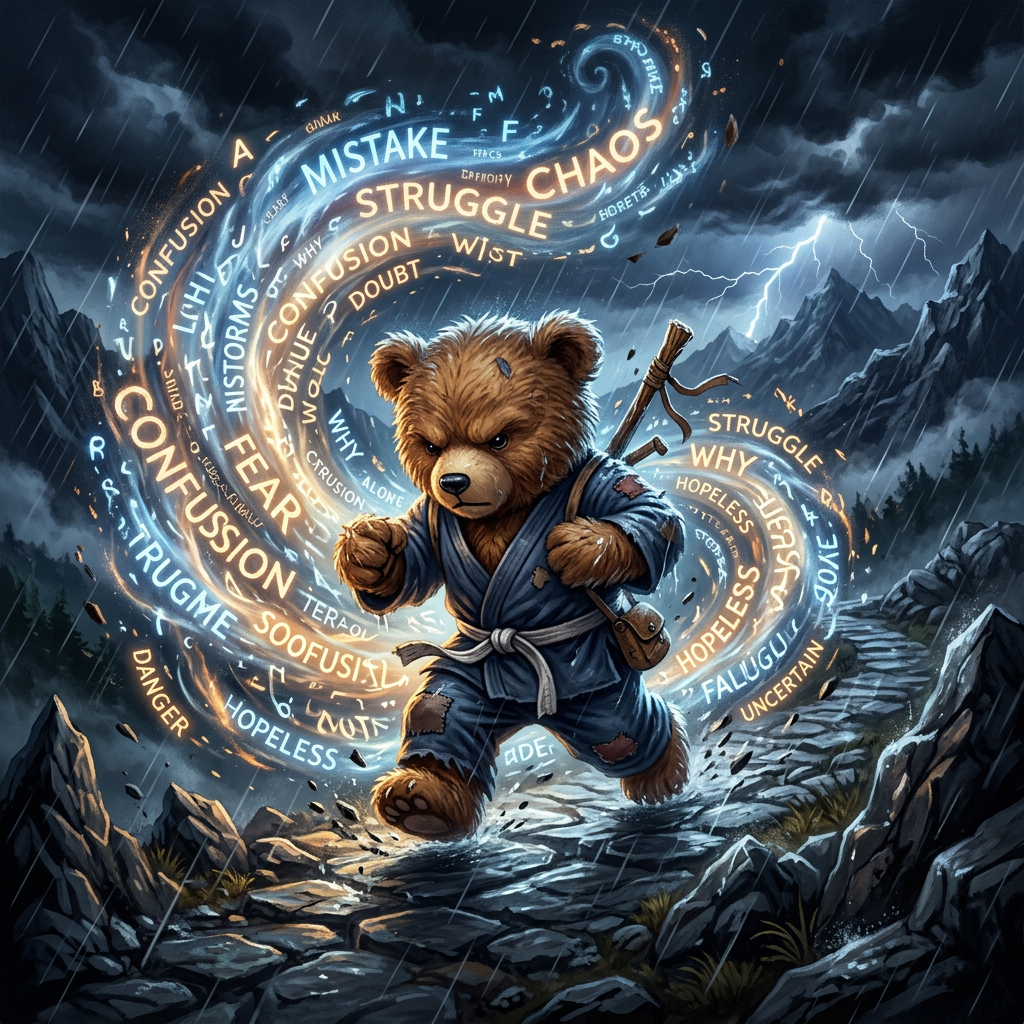
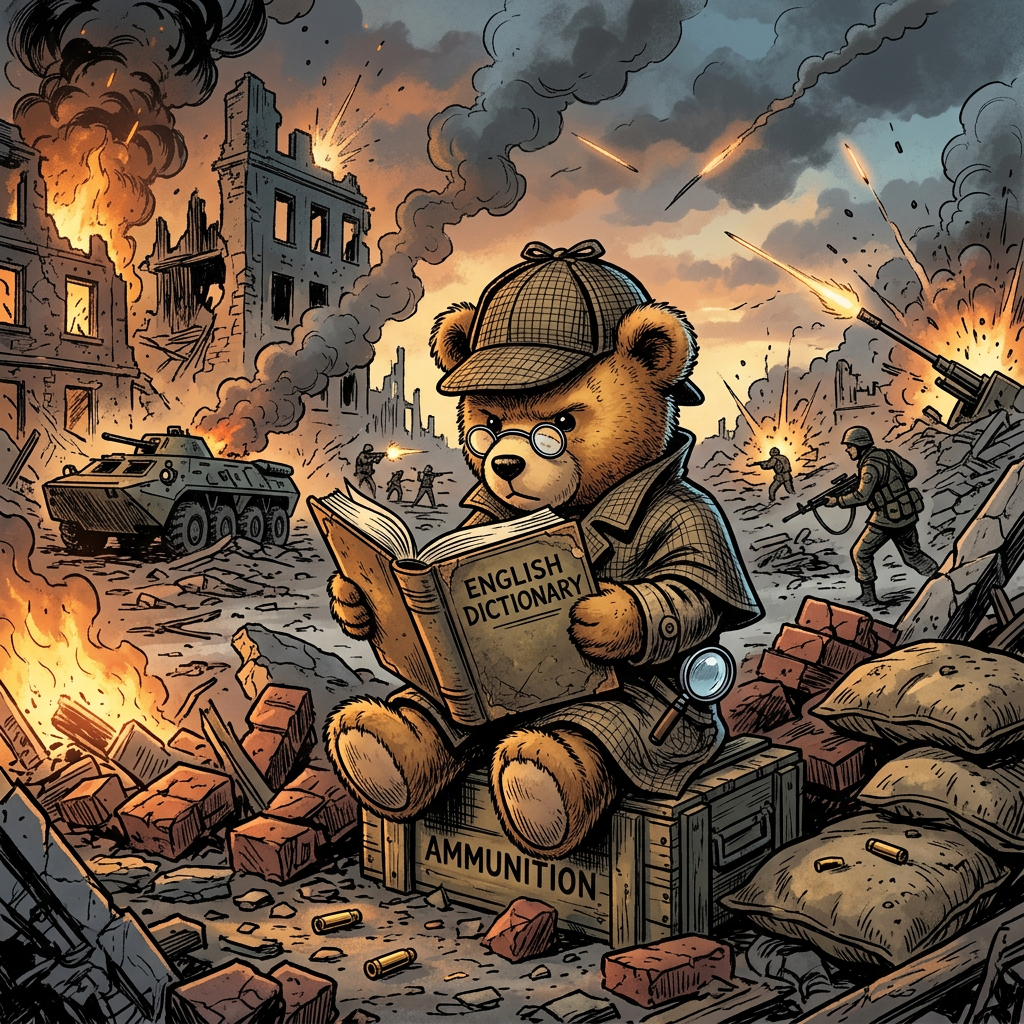
As for the little Wing Chun Teddy Bear above, I own a shakuhatchi, it is as hard as steel, and legal.
In general, the modern-day shakuhachi is the Fuke Shakuhachi (普化尺八), which was developed by Zen monks during the Edo period. The flute was used for spiritual purposes by the monks of the Fuke Zen sect, a branch of the Rinzai school of Zen Buddhism. These monks—many of them ronin (masterless samurai)—were wandering, non-monastic, lay Buddhists. Known as komusō (虚無僧) or “monks of emptiness,” they used the shakuhachi to perform a type of musical meditation called suizen (吹禅), or “blowing Zen,” and they played the flute for begging and alms as part of their practice.
And being Ronin, if you tried to rob them things got real spicy, real quick.
LOVE EVERYBODY, BUT NEVER SELL YOUR SWORD, OR FLUTE.
The only constant is the concept of a DYNAMIC STRUCTURE.
WORKING ON FORM 2.
One of the claims we make about Wing Chun is that every move or shape can be used for defence or attack.
And this is correct.
As I have pointed out many times, defensive postures and structures are the opposite of attacking postures and structures: defence is soft, attack is hard, defence is passive, attack is dynamic, defence is reactive, attack is active- the list goes on.
Connected to disconnected, linked to delinked.
EMPTY AND FULL.
What I take away from this is that there is no ‘ONE WAY’ to do anything in Wing Chun, which means there is no sweet spot; everything is on a sliding scale.
We use different shapes and postures to deal with tall people than we do with short people, heavy people or light people; there is no one size fits all.
Personal experience of violence confirms this: no two violent incidents are the same, and as such the way to deal with them is likewise not the same.
The only constant is the concept of a DYNAMIC STRUCTURE.
Working on Forms is working on a DYNAMIC STRUCTURE.
But there is a problem here: how can we work on ‘DYNAMIC STRUCTURE’ in a PASSIVE environment where the ‘STRUCTURE’ is not being tested?
STRUCTURE is both manufactured and maintained by tension, minimum tension to be sure, but tension nonetheless.
Resistance training is a way of understanding how much tension, understanding the parameters of what is too little, and what is too much.
Before we can begin working on how much Tension, we must understand what Tension is and understand at what point acceptable tension, the natural amount required to maintain any structure, becomes unacceptable tension, which creates blockages and misalignments.
This is a sliding scale from Spaghetti Arms to turning green and becoming the Incredible Hulk.
How can we find the Goldilocks zone if we do not know where the opposite ends are?
Where this becomes confusing is when we use descriptions such as empty the arm, or open the joint, or release the tension, even worse when we are told to just RELAX.
The simple act of creating energy causes tension.
This is the role of solo forms training: to be able to turn a word we may not fully understand into a picture we recognise and can move forward with.